 Written and reviewed by the A-Z Landscaping Design-Build Team Richmond Hill, ON12+ years · 380+ projectsLast updated
Fence installation cost in Toronto & the GTA for 2026: cedar, horizontal, aluminum & composite fences per linear foot, gates, Toronto height rules and shared fences.
Quick answer: In Toronto and the GTA in 2026, fence installation typically costs $65 to $100 per linear foot for a 6-foot cedar board-on-board privacy fence, $80 to $130 per linear foot for a horizontal cedar fence, and $90 to $160 per linear foot for an aluminum fence. A typical 150-foot backyard run costs about $10,000 to $20,000 in cedar, and each matching gate adds roughly $800 to $3,000+.
A good fence does several jobs at once: it gives your backyard privacy, keeps children and pets in, satisfies pool-enclosure rules and frames the landscape. A poor one leans within a few winters, rots at the base and starts arguments with the neighbours. In the GTA, the difference usually comes down to how the posts are set and how well the fence suits the property and the by-laws. This guide sets out what fence installation costs in Toronto and the GTA in 2026, how materials compare, what the rules say, and how to plan a fence that lasts.
Fence installation cost per linear foot (2026)
| Fence type | Installed cost per linear ft | Typical lifespan | Best for |
|---|---|---|---|
| Pressure-treated wood privacy fence | $45 to $70 | 15 to 20 years | Budget privacy, utility areas |
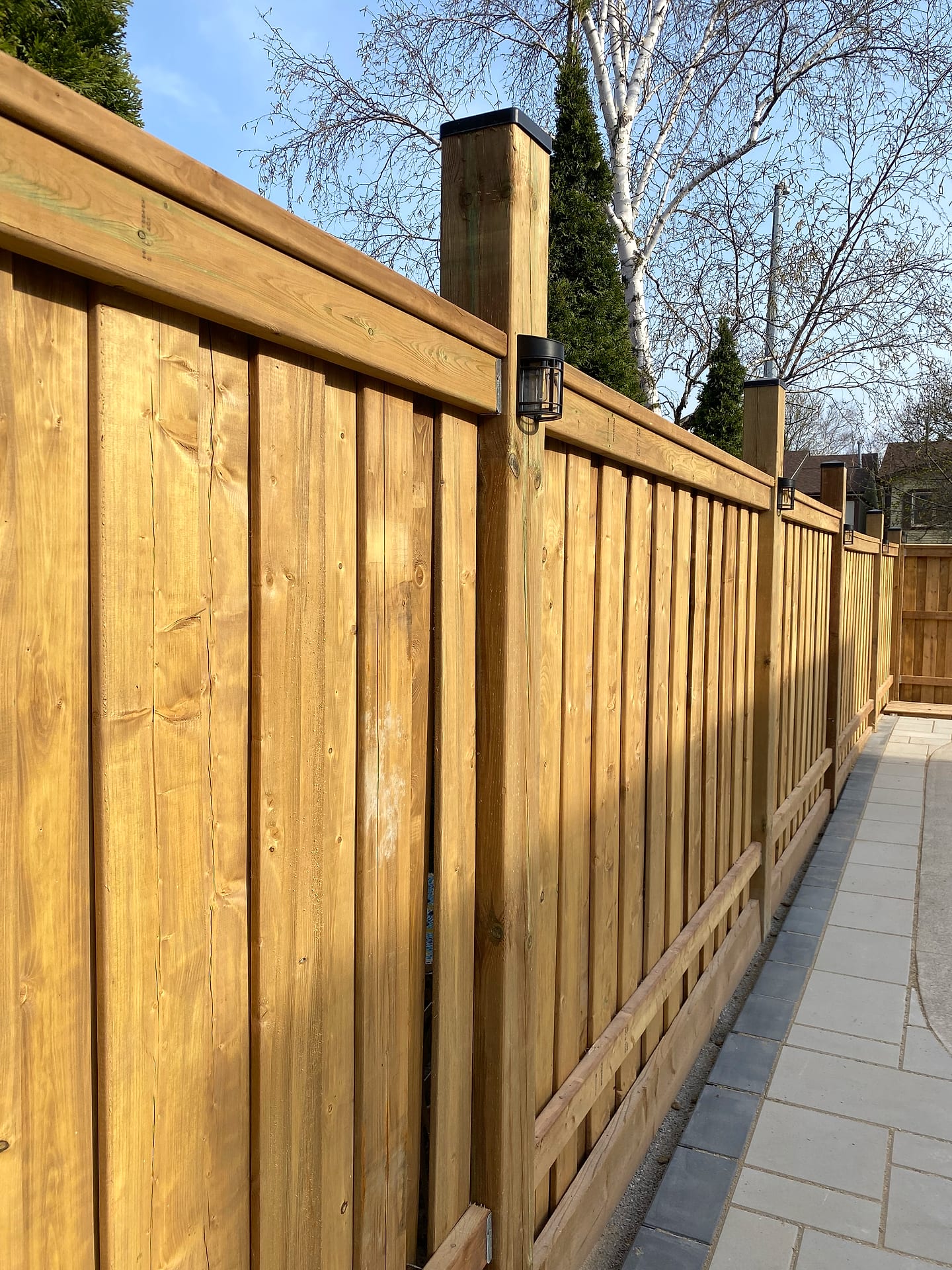
| Cedar board-on-board privacy fence (6 ft) | $65 to $100 | 15 to 25 years with care | Classic full privacy |
| Horizontal cedar or slat fence | $80 to $130 | 15 to 25 years with care | Modern homes, feature walls |
| Aluminum fence | $90 to $160 | 30+ years | Low maintenance, pool enclosures |
| Composite fence | $100 to $160 | 25+ years | Privacy with minimal upkeep |
Prices include removal of a typical old fence, posts set in concrete, panels or boards, and installation. Gates, slopes, extra height and difficult access are additional.
What a typical GTA fence costs
| Project | Cedar privacy | Horizontal cedar | Aluminum |
|---|---|---|---|
| 50 ft side-yard run with one gate | $4,100 to $8,000 | $4,800 to $9,500 | $5,300 to $11,000 |
| 100 ft rear-yard run | $6,500 to $10,000 | $8,000 to $13,000 | $9,000 to $16,000 |
| 150 ft backyard perimeter with two gates | $11,500 to $21,000 | $13,500 to $25,500 | $15,000 to $30,000 |
What drives the price of a fence
Material and design
Cedar board-on-board is the GTA's classic privacy fence: no gaps, warm colour and a long life with care. Horizontal slat fences need more framing and more precise carpentry, which is why they cost more. Aluminum costs the most up front but needs almost no maintenance and suits pool enclosures. Our fences and gates service covers each option.
Posts and footings
The single most important part of a fence is the post. In the GTA, posts must be set deep enough in concrete to resist frost heave, roughly 1.2 metres, or they lift and lean after a few winters. Cheap quotes often save money here. Ask any contractor how deep the posts will go.
Gates
Each gate needs heavier posts, a frame that stays square, and quality hinges and latches, so gates cost far more than the same width of fence. Double gates for vehicle or machine access cost more again, and automation adds further.
Slopes, removal and access
Sloping yards need stepped or raked panels. Removing an old fence, digging through roots, and working along tight property lines where material has to be carried in by hand all add labour.
Fence height rules in Toronto and the GTA
Every municipality sets maximum fence heights, and knowing them avoids an order to cut a new fence down.
- Toronto: under Chapter 447 of the Municipal Code, rear-yard fences are generally limited to 2 metres, and fences within 2.4 metres of the front lot line to 1.2 metres. Corner lots and fences near driveways have additional sight-line rules.
- Vaughan, Richmond Hill, Markham, Mississauga and Oakville: each has its own fence by-law with similar front-yard and rear-yard limits. We confirm the current rule for your address.
- Pool enclosures: pool fences must meet the municipality's pool-enclosure by-law for height, climbability and self-closing, self-latching gates, and a permit is usually required before the pool can be filled.
Where you want more privacy than a compliant fence can give, for example when a neighbour builds a taller house, we combine the fence with tall screening planting, freestanding slat screens near seating areas, or a pergola that blocks views from above.
Shared fences and your neighbours
A fence on the property line is usually shared, and talking to your neighbour early saves trouble later. Agree on the line, the style and how costs will be split, and put it in writing. In Ontario, the Line Fences Act provides a process for boundary fences where neighbours cannot agree. If the exact line is uncertain, a survey avoids building a fence in the wrong place. Before any post hole is dug, buried services must be located through Ontario One Call; we arrange the locates on every project.
Cedar fence maintenance and lifespan
Cedar resists rot naturally, but it lasts longest when it is kept off the ground, allowed to dry and protected with a quality stain or sealer every few years. Left untreated, cedar weathers to a silver-grey, which some homeowners like. Composite and aluminum need only occasional washing. Whatever the material, the posts decide the lifespan: properly set posts in concrete, with the concrete shaped to shed water, can outlast several sets of boards.
Fences as part of the landscape
A fence works best when it is designed with the rest of the yard. Horizontal cedar screens can continue around a patio or hot tub as feature walls; a fence can incorporate a gate that aligns with a path; and planting in front of a fence softens it and adds depth. Lighting on or near the fence can graze the boards at night. In our Richmond Hill sauna project, cedar privacy fencing ties the sauna and patio together. If you are also planning a deck, our deck and pergola cost guide covers matching carpentry.
Choosing the right fence for your situation
Full backyard privacy
A 6-foot cedar board-on-board fence is the default for privacy along rear and side lot lines, offering no gaps, a warm natural look and good value. Where the neighbour's home is much taller, add screening planting or a pergola rather than trying to exceed the height limit.
A modern home or a feature wall
Horizontal cedar or thermally modified wood slats suit contemporary homes and can continue around a patio, hot tub or sauna as a feature. They need more framing, so they cost more, but they become part of the architecture.
A pool enclosure
Aluminum or a compliant wood design with self-closing, self-latching gates. The fence must meet the municipality's pool-enclosure by-law before the pool is filled, so design it with the pool, not after.
A front yard
Keep it low and open, within the front-yard height limit. A low picket, aluminum or decorative fence with planting behind it frames the house without hiding it.
Low maintenance above all
Aluminum and composite cost more up front but need only occasional washing, with no staining or replacement boards.
Fence questions we hear most
Do I need a permit for a fence? Most standard backyard fences within the height limit do not need a building permit, but pool enclosures need a pool-enclosure permit, and fences over the limit need a variance or exemption. Rules vary by municipality.
Who pays for a shared fence? Usually the neighbours split it by agreement. If you cannot agree, the Line Fences Act sets out a process through your municipality.
Can you reuse my old posts? Rarely. If the posts are leaning, rotted or set shallow, new posts set properly in concrete are the only way to get a fence that stays straight.
How long does a cedar fence last? Typically 15 to 25 years with periodic staining and good posts. Untreated, it weathers to grey and lasts at the lower end of that range.
When to install a fence
Fences can be installed from spring through late autumn, as long as the ground is not frozen when posts are set. Spring is the busiest season, so booking in winter secures an early start. A typical backyard fence takes two to five days on site, depending on length, gates and access. If a pool is being installed, the enclosure fence must be complete and inspected before filling, so plan it early.
How to compare fence quotes
Fence quotes can look similar and hide very different fences. When you compare, check that each quote states the post depth and whether posts are set in concrete, the post size and spacing, the board or panel material and thickness, the number and width of gates and the hardware, whether removal and disposal of the old fence is included, and how slopes will be handled. A quote that is noticeably cheaper usually saves money on posts, the part that decides how long the fence stays straight.
How to get a fixed fence quote
We start with a free site visit to measure the runs, mark gates, check slopes and access, and confirm the height rules for your address. You receive a fixed, itemized quote with removal, posts, panels, gates and hardware each priced on its own line, and a drawing that shows the layout. Our own carpenters build every fence, and the workmanship carries a multi-year warranty. See our fences and gates service, browse completed fences and gates, and book your free estimate or call (416) 846-5893.